
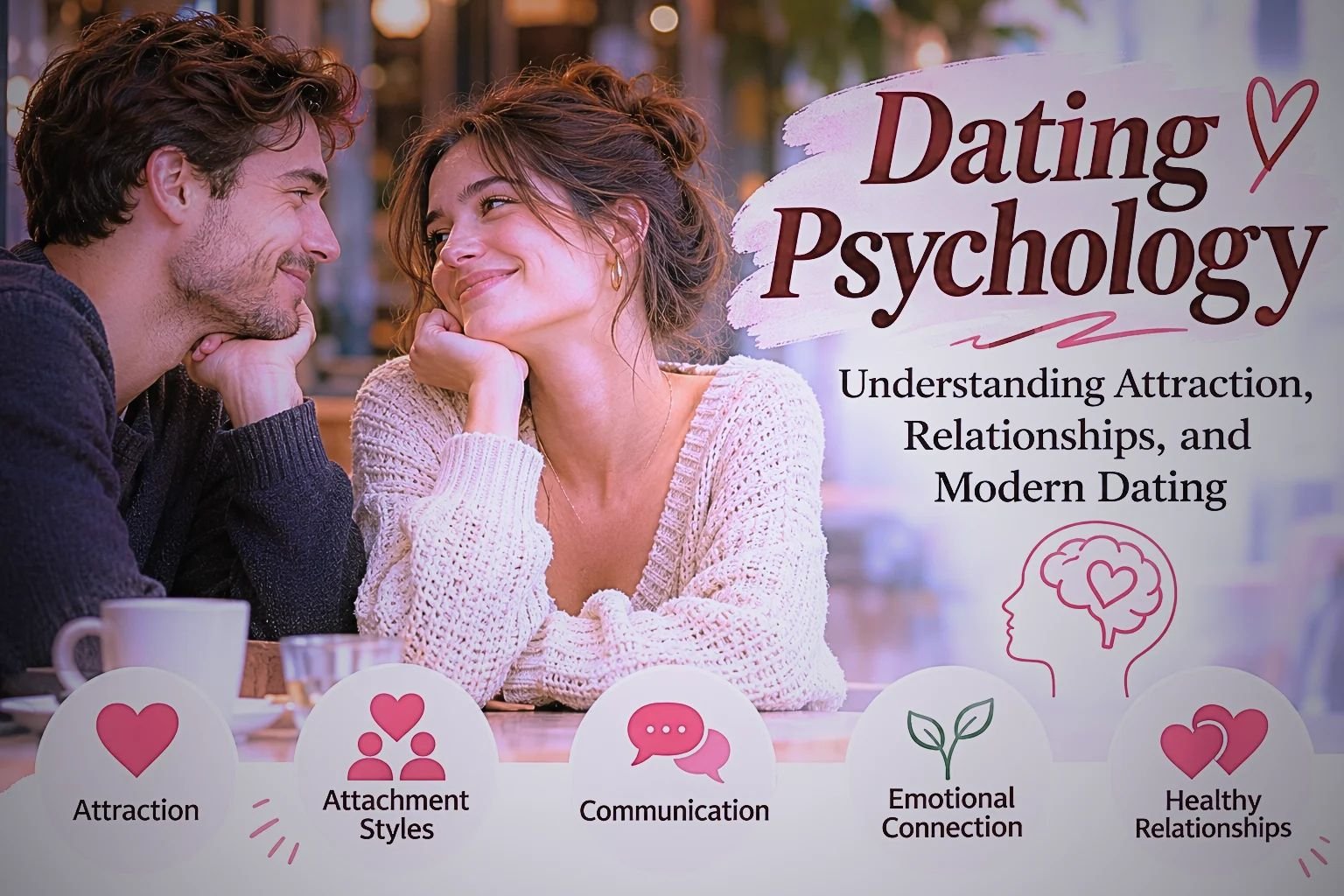
Dating is more than finding someone you like. It entails feelings, enchantment, verbal exchange, expectations, personal barriers, and the manner in which humans hook up with each other. Sometimes, a relationship feels interesting and convenient. At other instances, it can depart people burdened, annoying, disenchanted, or uncertain about what they really want.
Understanding courting psychology can assist human beings recognize their emotional styles, speak greater correctly, and make more healthy dating selections. It does not provide a formulation for making a person fall in love, but it can provide precious insights into why humans sense interested in sure individuals, how emotional connections expand, and why relationships occasionally emerge as complicated.
From attachment patterns and romantic attraction to courting anxiety and emotional compatibility, psychology offers numerous approaches to understand contemporary relationship reviews.
What Is Dating Psychology?
Dating psychology refers to the psychological factors that have an effect on how human beings develop romantic attraction, pick suitable companions, speak at some stage in dating, and construct relationships.
It entails knowing how feelings, character, past experiences, expectations, vanity, and social influences have an effect on romantic behavior.
When a person develops overwhelm, feels worried before a first date, struggles to accept a new associate as true, or becomes emotionally attached, exclusive mental strategies may be concerned.
Dating psychology can assist people in understanding questions consisting of:
- Why am I interested in certain human beings?
- Why do I feel frightened when a relationship is new?
- Why do I engage in a little human conflict with dedication?
- Why do I turn out to be emotionally attached so quickly?
- How can I construct a healthier romantic courtship?
Understanding those patterns can make relationship greater intentional in place of pushed absolutely via emotions or assumptions.
How Human Attraction Works

Attraction is a complex emotion prompted by the aid of a couple of elements. Physical appearance can also, to start with, entice a person’s interest; however, emotional connection, character, verbal exchange, shared values, and interpersonal compatibility can also affect whether a romantic relationship develops.
Physical Attraction
Physical attraction is frequently one of the first factors humans note when assessing a person. Appearance, facial expressions, frame language, non-public style, and different visible characteristics may also make contributions to preliminary romantic hobby.
However, physical attraction does not routinely cause a successful relationship. People may feel attracted to someone while not having well-suited values, conversation styles, lifestyles, or long-term expectations.
Emotional Attraction
Emotional enchantment involves feeling drawn to a person’s personality, emotional qualities, attitude, or capability to connect.
Someone may also become emotionally interested in every other man or woman due to the fact that they feel understood, respected, liked, safe, or supported around them.
Emotional appeal frequently develops through significant conversations, shared stories, agreement, and regular conversation.
Intellectual Attraction
Intellectual attraction can broaden when human beings experience changing ideas, discussing significant topics, mastering from one another, or appreciating each other’s views.
For a few people, interest, humor, creativity, problem-solving skills, and considerate conversations are essential components of a romantic hobby.
Shared Values and Compatibility
People may additionally experience more cushty constructing relationships with someone whose values, priorities, lifestyle, and expectations align with their own.
Compatibility does not require two human beings to have the same interests. It may additionally involve knowledge differences, respecting men’s or women’s perspectives, and sharing essential goals.
Attraction Factor What It May InvolvePhysical attractionAppearance, expressions, style, and physical chemistryEmotional attractionFeeling understood, respected, and emotionally connectedIntellectual attractionEnjoying conversations, thoughts, curiosity, and perspectivesSocial compatibilitySimilar lifestyles, verbal exchange choices, and social habitsValues compatibilityShared priorities, ideals about relationships, and future expectancies
Why Do People Fall in Love?
Falling in love can contain an aggregate of emotional connection, attraction, psychological desires, shared experiences, and private circumstances.
There isn’t any single reason why human beings fall in love. Romantic relationships vary depending on the individuals concerned and the stories they share.
Emotional Connection
Emotional connection can develop while people experience comfortable sharing thoughts, stories, fears, hobbies, and personal tales.
When conversations turn out to be extra significant and each people experience listened to, they may begin to expand a more potent sense of closeness.
Feeling Appreciated
Feeling appreciated and revered can contribute to advantageous courting experiences.
Small moves inclusive of remembering essential information, imparting support, showing interest, and acknowledging someone’s feelings may help create a more potent emotional connection.
Shared Experiences
Spending time together, taking part in activities, discovering not unusual interests, and navigating new roles can help humans broaden familiarity and connection.
Shared stories may additionally provide opportunities to learn the way every other character communicates, handles stress, expresses emotions, and responds to exclusive situations.
Trust and Emotional Safety
Trust is a critical part of healthy relationships. People are much more likely to feel comfortable developing emotional intimacy once they accept that what they can communicate is true, without being continually brushed off, manipulated, or disrespected.
An evaluation of relationship psychology research highlights several essential courting procedures, consisting of responsiveness, interdependence, personal tendencies, and the manner companions compare and experience their relationships.
What Are Attachment Styles in Dating?

Attachment styles are patterns related to how humans revel in emotional closeness, protection, agreement, and connection in relationships.
The attachment concept is often used to recognize why some humans feel comfortable with intimacy while others may also revel in anxiety, emotional distance, or difficulties trusting romantic partners.
Attachment patterns aren’t permanent labels. People may additionally experience one-of-a-kind behaviors throughout relationships, and attachment-associated tendencies can change through experiences, reflection, and supportive relationships.
Secure Attachment
People with more steady attachment dispositions might also feel comfortable with emotional closeness at the same time as maintaining their independence.
They may typically find it easier to speak their needs, agree with others, manage disagreements, and are looking for assistance when important.
Secure attachment does not mean someone is free from jealousy, lack of confidence, or courting battle.
Anxious Attachment
Anxious attachment tendencies may additionally involve situations about rejection, abandonment, or uncertainty in relationships.
Someone experiencing a disturbing attachment may also:
- Frequently fear whether their partner is fascinated.
- Seek reassurance while communication changes.
- Feel uncomfortable when courting expectations are unclear.
- Overthink messages or conversations.
- Become emotionally distressed when they understand distance.
These reviews are not necessarily symptoms of a personality issue. They may additionally reflect underlying emotional patterns, individual circumstances, or past experiences.
Avoidant Attachment
Avoidant attachment tendencies may additionally involve discomfort with emotional vulnerability, dependence, or excessive closeness.
Someone with avoidant dispositions may additionally:
- Prefer keeping emotional independence.
- Find it hard to speak about susceptible feelings.
- Feel uncomfortable when a relationship becomes intense.
- Withdraw in the course of emotional warfare.
- Need extra private space.
These behaviors do not routinely imply a person lacks feelings or cannot form a meaningful relationship.
Fearful-Avoidant Attachment
Fearful-avoidant attachment is regularly related to conflicting emotions about emotional closeness.
Someone can also preference connection while concurrently traumatic about rejection, believe, vulnerability, or being hurt.
This can now and again result in inconsistent relationship conduct, although reports range considerably among individuals.
Attachment Pattern Common Relationship Tendencies Secure Comfortable with intimacy, communication, and independence Anxious Greater sensitivity to rejection or courting uncertainty Avoidant Greater desire for independence or emotional distanceFearful-avoidantConflicting emotions about intimacy and emotional safety
Research on attachment and near relationships shows that attachment-related dispositions can have an effect on dating methods and experiences, despite the fact that they no longer decide the final results of each relationship.
Why Modern Dating Can Feel Difficult
Modern dating gives extra methods to find potential partners than ever before. Dating apps, social media, online groups, and virtual verbal exchange have modified how people broaden romantic connections.
However, more opportunities do not always make courting easier.
Dating App Overload
Dating apps permit human beings to explore compatibility, however continuously viewing profiles and comparing alternatives may additionally make a few humans feel overwhelmed.
The experience can once in a while inspire a focus on appearances, short judgments, or the idea that another match may continually be available.
Dating apps also can be useful tools for meeting folks who share similar pastimes or dating goals. The experience relies upon how people use them and what they’re searching for.
Mixed Signals
Mixed alerts can arise whilst someone’s phrases and moves appear inconsistent.
For example, a person may also express romantic hobby however not often make plans, communicate enthusiastically someday and disappear the subsequent, or keep away from discussing relationship expectations.
Instead of seeking to interpret every message, it can be more helpful to observe patterns over the years and communicate expectations immediately.
Ghosting
Ghosting takes place whilst a person stops speaking without offering an explanation, frequently after a courting connection has evolved.
Ghosting can go away the opposite character feeling burdened, rejected, or uncertain about what took place.
Although humans ghost for distinctive reasons, the behavior may contain avoidance of uncomfortable conversations, changing hobbies, uncertainty, or other instances.
Being ghosted does not robotically imply a person did something wrong or changed into someone not worth dating.
Fear of Commitment
Some human beings may additionally feel uncomfortable getting into a devoted relationship because of concerns about losing independence, being emotionally vulnerable, repeating previous dating stories, or making the wrong decision.
Commitment worries may additionally have one-of-a-kind reasons, and they can’t be accurately recognized through unmarried behavior.
Open conversations about expectancies, boundaries, and relationship dreams can assist each humans apprehend whether they are seeking out similar matters.
How to Build Emotional Connection While Dating

Building emotional connection calls for more than enchantment. It often entails verbal exchange, mutual effort, trust, recognition, and the willingness to recognize the other person.
Ask Meaningful Questions
Meaningful conversations can assist human beings examine greater approximately every different’s experiences, values, hobbies, and expectancies.
Instead of focusing entirely on small talk, do not forget asking questions which include:
- What do you experience doing when you have free time?
- What is something you’re running towards properly now?
- What does a healthy relationship appear to be to you?
- What features do you appreciate most in a companion?
- What studies have shaped the way you view relationships?
These questions ought to feel natural instead of like an interview.
Listen Without Trying to Fix Everything
Good communication involves listening cautiously rather than at once looking to remedy each problem.
When a person shares a personal revelation, acknowledging their feelings and asking considerate follow-up questions can help them feel heard.
Be Honest About Your Intentions
Being sincere about what you want from a relationship can reduce confusion.
Whether a person is interested in casual dating, an informal relationship, or definitely getting to know people, speaking expectations respectfully can help prevent needless misunderstandings.
Respect Boundaries
A healthy relationship includes respecting personal barriers, emotional needs, physical comfort, and personal independence.
A dating have to not require someone to continuously prove their interest, sacrifice personal identification, or ignore their personal comfort.
Allow Connection to Develop Naturally
Emotional connection takes time. Trying to pressure intimacy, call for instantaneous dedication, or create unrealistic expectations may additionally make dating more disturbing.
Allowing people to get to recognise each other regularly can offer a higher possibility to understand compatibility.
Dating Anxiety: Why It Happens and How to Manage It
Dating anxiety can involve nervousness, worry, self-focus, or fear of rejection whilst assembling or speaking with potential romantic partners.
Some people experience mild nervousness earlier than a date, whilst others can also locate relationship situations drastically worrying.
Common studies may also encompass:
- Worrying about what to mention.
- Overthinking text messages.
- Fear of being rejected.
- Feeling uncomfortable assembling new human beings.
- Worrying about physical appearance.
- Replaying conversations after a date.
Focus on the Experience, Not the Outcome
Instead of thinking most effective approximately whether someone will such as you, remember whether you experience spending time with them.
Dating isn’t just about being evaluated. Both people are gaining knowledge of whether they feel comfortable, involved, and well matched.
Avoid Overanalyzing Every Interaction
A delayed reply, quick message, or change in tone may additionally have numerous motives.
Making assumptions without enough facts can cause useless stress.
Build Confidence Gradually
If relationship feels overwhelming, progressively engaging in social activities, conversations, and courting reviews may additionally assist you grow to be more snug.
Confidence frequently develops through experience instead of waiting until each lack of confidence disappears.
If tension is continual or notably impacts daily existence, speaking with a certified mental health professional may be useful.
Signs You May Be Developing a Healthy Relationship
Healthy relationships are not perfect. They contain verbal exchange, compromise, barriers, recognition, and the ability to address troubles constructively.
Some signs of a more fit relationship may additionally encompass:
Relationship Quality What It Looks LikeMutual respectBoth people admire opinions, barriers, and individualityHonest communicationPartners can talk about emotions and expectations Trust There is a sense of reliability and emotional securityMutual effortBoth people contribute to the relationshipEmotional supportPartners support each other without controlling one anotherConflict resolutionDisagreements can be addressed respectfully Independence Both human beings can maintain non-public pursuits and friendships Compatibility Important expectations and values are fairly aligned
Healthy relationships are built through consistent behaviors instead of promises by myself.
Common Dating Mistakes to Avoid
Dating can contain studying, uncertainty, and coffee mistakes. Recognizing common patterns might also assist human beings in approaching relationships with more awareness.
Ignoring Red Flags
Strong attraction can sometimes make human beings overlook behaviors that struggle with their barriers or values.
Pay attention to repeated dishonesty, disrespect, controlling behavior, stress, or consistently broken promises.
Trying to Impress Someone at Any Cost
Changing your persona, hobbies, or values to gain a person’s approval may also make a relationship emotionally arduous.
Authenticity can help humans perceive connections that are extra compatible with who they clearly are.
Expecting Instant Compatibility
A first date might also feel exciting, awkward, or uncertain. One interaction does not usually offer sufficient information to determine whether two humans are compatible.
Confusing Intensity With Compatibility
Strong chemistry does not mechanically mean a relationship will be wholesome or sustainable.
Compatibility may additionally involve communication, values, emotional maturity, mutual admiration, and the ability to deal with disagreements.
Avoiding Difficult Conversations
Avoiding conversations about expectations, limitations, exclusivity, or communication possibilities might also create misunderstandings.
Respectful verbal exchange can assist each humans make knowledgeable decisions approximately the connection.
Frequently Asked Questions About Dating Psychology
What is dating psychology?
Dating psychology explores how feelings, attraction, persona, attachment, rapport, and social influences affect romantic relationships and dating conduct.
Why do humans fall in love?
People may also fall in love via a mixture of enchantment, emotional connection, shared experiences, compatibility, and personal experiences. There isn’t any single explanation that applies to everyone.
What makes a person attractive psychologically?
Attraction might also include physical appearance, confidence, kindness, humor, emotional responsiveness, shared values, conversation, and persona. Different humans prioritize extraordinary qualities.
Why do people ghost in relationships?
People can also ghost because of changing interests, pain with tough conversations, uncertainty, avoidance, or non-public situations. Ghosting does not necessarily mirror the value or characteristics of the individual who reviews it.
Can attachment patterns change?
Attachment-related patterns may additionally change over the years via self-awareness, relationship studies, supportive connections, and now and again remedy. Attachment patterns must no longer be viewed as permanent labels.
How can I prevent overthinking in a relationship?
Focus on observable behavior as opposed to assumptions, talk at once when suitable, maintain your personal hobbies, and avoid decoding every message as evidence of someone’s emotions.
What is the most vital component in a healthful courtship?
There is no unmarried thing that guarantees a healthy relationship. Mutual admire, accept as true with, communication, barriers, emotional assist, compatibility, and regular effort are among the characteristics that can make contributions to dating properly-being.
Conclusion
Dating psychology can help human beings apprehend the emotional and behavioral styles that have an effect on appeal, romantic relationships, and cutting-edge relationship stories.
From attachment styles and emotional appeal to relationship anxiety and verbal exchange, understanding those concepts can help humans make more considerate selections about whom they date and how they build relationships.
Dating does no longer have to be approximately locating the proper man or woman or following a hard and fast of mental guidelines. It may be an opportunity to understand yourself, recognize what you feel, communicate really, and expand significant connections.
The healthiest relationship stories regularly start with mutual appreciation, emotional attention, realistic expectations, and the liberty to be yourself.